Most organizations run on a strong stack of enterprise systems, yet the work that moves between them often tells a different story. A finance manager approves a vendor payment over email. A department head chases three people over Teams for sign off on a budget request. An IT ticket sits untouched because nobody is sure whose approval it needs next.
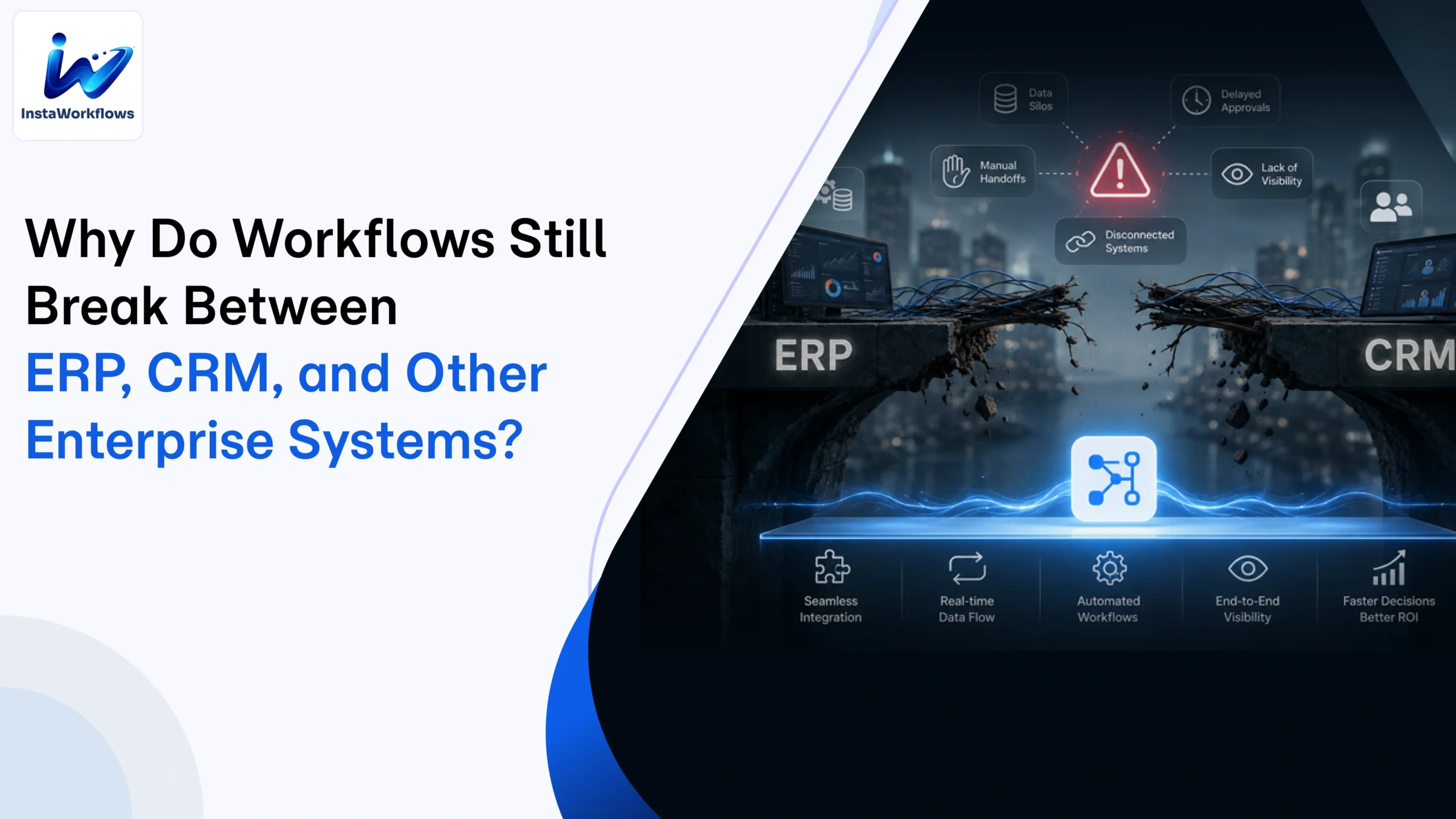
None of this points to a system failure. ERP, CRM, HRMS, and ITSM platforms are doing exactly what they were designed to do: managing records, transactions, and operational data. The challenge begins when a business process spans multiple departments and systems. That’s where work often shifts to email threads, spreadsheets, and manual follow-ups, despite investments in business process automation software.
The result is a workflow gap that reduces visibility, slows decisions, and makes it harder to maintain accountability across the organization.
Where does the breakdown actually happen?
The breakdown becomes most visible in processes that require coordination across multiple departments. A vendor onboarding request needs sign off from procurement, finance, and sometimes legal. A new hire’s system access needs approval from HR, IT, and the relevant department head. A capital expenditure request needs review from a manager, a finance controller, and often a senior leader. None of these processes live neatly inside one system.
What these processes have in common is that they are approval-driven rather than owned by a single team. They require structured, complete, and consistent information at the point of request, clearly defined approval paths, accountability at every stage, and visibility into where each request stands.
These requirements typically span multiple enterprise systems rather than belonging to any one of them, which is why approval-driven processes often fall back to email, spreadsheets, and manual follow-ups.
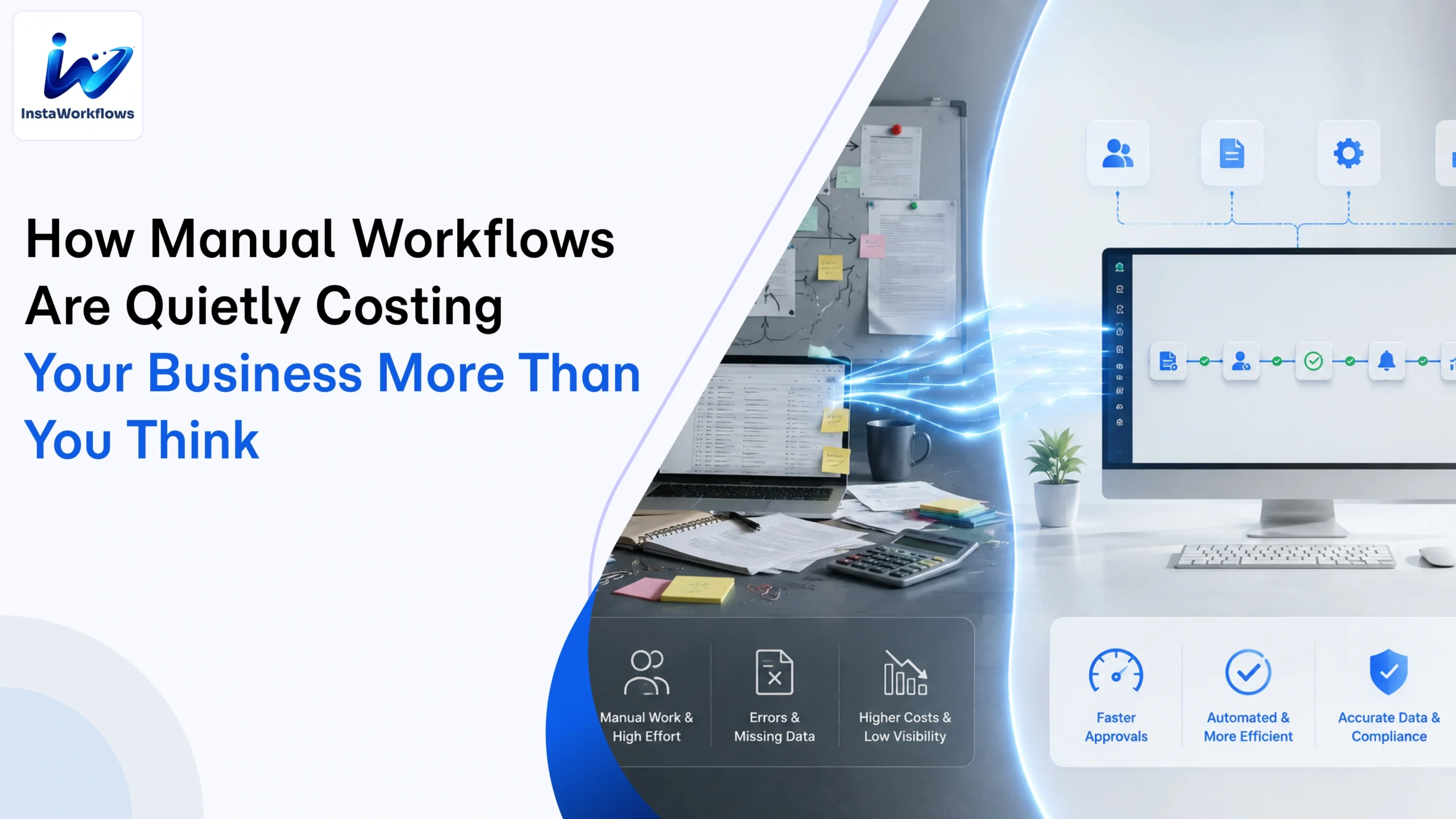
Without proper governance processes in place, these requests end up scattered across inboxes and spreadsheets. There is no single source of truth, no consistent audit trail, and no easy way to tell where a request stands at any given moment.
Why Point Fixes Don’t Solve The Problem
Faced with these gaps, most organizations try to patch the process rather than improve it. IT teams get asked to build a custom form. A department creates a shared spreadsheet with color-coded status columns. Someone sets up an email rule to flag urgent approvals. These fixes offer short-term relief, but they rarely scale as organizations grow, teams change, or approval requirements become more complex.
As these workarounds become harder to manage, organizations often begin evaluating business process automation software to bring more structure to cross-functional processes. Some also invest in workflow design software to model and automate workflows. While these tools can be effective, they often require significant configuration or technical effort for relatively straightforward approval-driven processes.
The real challenge is finding a solution that standardizes requests, supports governed approvals, and complements existing enterprise systems without adding unnecessary complexity. The right workflow management software should help organizations standardize approval-driven processes while allowing business teams to adapt workflows as requirements evolve. At the same time, IT should retain the governance, security, and control needed to support the organization at scale.
The Real Answer Is A Workflow Layer That Works Across Systems
What most organizations actually need is not another core system to maintain, but a complementary workflow layer that works across the systems they already use. Rather than replacing ERP, CRM, HRMS, or ITSM, this layer supports the approval-driven business processes that span multiple departments and systems, bringing structure, visibility, and accountability to work that would otherwise happen through email and spreadsheets.
For this to work in practice, the platform should be easy to configure as business requirements evolve. This is where low code process automation becomes valuable. Business teams should be able to configure approval paths, update routing rules, or introduce new approval steps without relying on lengthy development cycles, while IT continues to oversee governance, security, and enterprise-wide standards.
The goal is not to replace existing enterprise systems, but to complement them with a workflow layer purpose-built for structured, approval-driven business processes.
How InstaWorkflows Fills The Gap
InstaWorkflows is built as a complementary workflow layer for the approval-driven processes that sit outside ERP, CRM, HRMS, and ITSM. Rather than replacing these systems, it works alongside them, giving organizations a structured way to manage the requests, approvals, and cross-functional coordination.
The platform combines structured data collection, configurable approval processes, operational visibility, AI assistance, and business process management to help organizations standardize approval-driven workflows across departments.
This enables organizations to capture complete information, automate approvals based on business rules, improve visibility, and manage repeatable processes without disrupting existing enterprise systems.
For organizations evaluating business process automation software, InstaWorkflows offers a focused approach to approval-driven business processes that span multiple departments and systems. Unlike generic workflow management software, it emphasizes structured requests, governed approvals, and operational visibility, helping organizations standardize the processes that fall between their core enterprise applications.
Let’s understand this with a practical example involving CAPEX approvals.
Consider a company where a department manager needs approval to purchase equipment above a defined spend threshold. The ERP already tracks budgets and financial records, but the approval process itself still happens through emails, spreadsheets, and manual follow-ups between department heads, finance teams, and senior leaders.
With no structured workflow, requests may arrive with incomplete information, approval ownership may be unclear, and teams have limited visibility into where a request stands.
With InstaWorkflows, the request begins with structured information collection and moves through configurable approval paths based on business rules, spend limits, and organizational hierarchy. Approvers can review requests with the required context, while teams gain visibility from submission through completion.
The ERP continues to manage financial data, while InstaWorkflows manages the approval process connecting teams and decisions. It brings business finance processes and automation together, helping organizations standardize CAPEX approvals without replacing the enterprise systems they already use.
What Changes When Workflows Have Structure
Structured approval processes bring consistent governance processes across departments, ensuring requests follow defined paths, decisions remain accountable, and teams have visibility throughout the approval lifecycle.
Business process automation software adds value by helping organizations standardize the work that happens between their core systems without replacing ERP, CRM, HRMS, or ITSM platforms.
The ability to adapt matters just as much as structure. With low code process automation, business teams can update approval thresholds, modify routing rules, or introduce new steps as requirements change, while IT maintains governance and control. This ensures that the workflow management software continues to support evolving business needs rather than becoming another rigid system.
Organizations do not need to replace the systems they already rely on to improve how work gets done. They need a workflow layer that connects teams, standardizes approval-driven processes, and enables better visibility across the business.